3rd Year
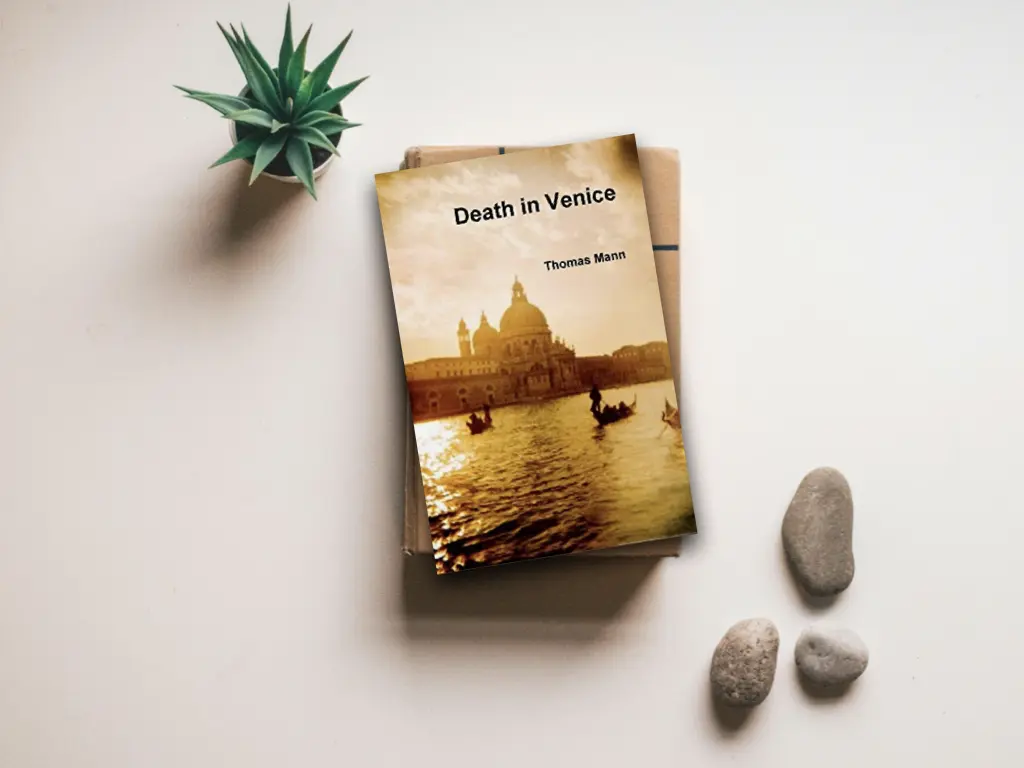
Within my critique of Thomas Mann’s “Death in Venice” (1912) and Angela Carter’s “The Bloody Chamber” (1979), this essay examines how Mann and Carter use intertextuality – through mythology and fairy tale designs to challenge 20th-century culture. My essay will examine Mann’s allusions to Greek mythology while Carter reimagines fairy tales to expose feminist values. Although both texts have a unique literary form, they deeply engage in gothic literature, using its design to explore repression, desire and transformation. I will examine how gothic literature differs from separate literary forms by applying a theoretical lens. Concerning Intertextuality, I will delve into the premises that Thomas Mann engages with romanticism and mythology while Angela Carter exposes patriarchal violence and forms of repression. Although Thomas Mann and Angela Carter’s literary styles overlap, I will highlight their unique approaches to gothic literature, illustrating how both texts engage with intertextuality.
Fairy tale stories usually include clear distinctions between characters, supernatural or magical elements, a problem protagonist and a conflict they must overcome. Thomas Mann’s “Death in Venice” (1912) and Angela Carter’s “The Bloody Chamber” (1979) challenge this traditional form of storytelling by introducing gothic elements by implementing gloomy and dark atmosphere, impending doom, immense psychological distress amongst characters and ominous foreshadowing. By incorporating gothic elements, Mann and Carter challenge conventional fairy tale structures, highlighting the role of intertextuality. Although both authors implement a newly developed gothic style, Carter reimagines traditional fairy tales to critique gender ideologies, whilst Mann draws heavily on Greek mythology. Mann and Carter have distinct conclusions; Mann succumbs to disease, obsession, and the results of decay, whilst Carter presents her protagonist with her mother saving her.
Angela Carter’s “The Bloody Chamber” and Thomas Mann’s “Death in Venice” fall into distinct and largely overlapping genres. Carter’s literature includes gothic techniques incorporating feminist and postmodern characteristics abundant in 20th-century literature. She also delves deeply into the fairy tale as she blends fantasy into gothic literature related to written folklore. During the early 20th century, modernist literature emerged as a dominant style. Thomas Mann used this style of literature to engage the reader in psychological depth, existential themes and a deep emphasis on symbolism and myth. Protagonist Aschenbach explores the immensely complex themes of beauty, art, decay, lust and the tension between his reason and passion. Both texts explore desire as a form of transgression – Mann through philosophical reflection and Carter through feminist critique. Aschenbach explores these narratives via philosophy in contrast to Angela Carter’s protagonist, who instils feminist critique, both using gothic techniques to present their literature, symbolism such as (The candlelight flickered over our heads as if we were in a coffin and the lid had just been lifted.” (Carter, 1979, p. 18) through emphasis of claustrophobia and doom. Mann’s literature engages with myth to shed light on the fragility of rationalism and the start of a cultural decline; Carter uses fairytale writing and the gothic form of literature to attack patriarchal ideologies and the reclamation of female autonomy and agency.
As a result of their historical period, Death in Venice and The Bloody Chamber differ substantially. Death in Venice, published in 1912, is deeply rooted in European modernism and explores aestheticism, repression sharply contrasted with decay, and the foreshadowing of a cholera outbreak in Venice. The Bloody Chamber focuses on the second-wave feminism ideals of the mid-20th century, challenging female agency and the patriarchal society women were subject to, a rich quote to demonstrate the objectification of women and the male gaze “A dozen husbands impaled a dozen brides while the mewing gulls swung on invisible trapezes in the empty air outside.” (Carter, 1979p. 21). Death in Venice and The Bloody Chamber are interconnected through credits to myth, fairy tales and the prevalent literary traditions. Mann was deeply influenced by German philosopher Nietzsche (1844-1900) stating that Nietzsche’s literature “establishes the Apollonian and Dionysian models of art” (Sizemore, 2014, p.235).
Carter dissolves the traditional fairy tale trope by using gothic horror to portray cultural and political notions of gender and immensely disproportionate power struggles. Therefore, the “Gothic” is not just a gimmick for a horror story; it also reflects modern politics and critiques the worst parts of societal and cultural expectations. Both texts explore immense desire as a destabilising force. While Mann’s use exemplifies a form of destructive obsession through his protagonist, Aschenbach, Carter uses hers for the liberation and self-discovery of her protagonist.
Intertextual similarities between Angela Carter’s The Bloody Chamber and Thomas Mann’s Death in Venice engage with the fairy tale and mythological approach to narration. Carter and Mann also use gothic techniques to critique society and its conventions. Mann’s protagonist, Aschenbach, displays a fear of personal and cultural decline, lensed through artistic measures while repressing his desires for Tadzio, whom he had lusted after in a state of repression: “Passion paralysed his tongue; a horrid, consuming desire took possession of him.”
(p. 57, Penguin Classics edition). Carter uses her form of expressing patriarchal values to express fear and transgression as a tool for empowerment. Therefore, Mann and Carter used their narratives to convey the dark, gloomy, gothic nature of fear, transgression, repression and lust to direct the epitome of their separate, gothic-styled literature.
Mann’s Death in Venice primarily draws on Greek mythology, particularly Narcissus, Orpheus, Eurydice and Apollo’s interaction with Dionysus; Sizemore’s critical analysis mentions that “Aschenbach is introduced to the reader as a disciplined man who triumphed over carnal desires and achieved his accomplishments by the absolute power of his own will” (Sizemore, 2014, p.235). Aschenbach Mann’s protagonist’s obsession with beauty, art and lust imitating self-destruction imitates Narcissus’s fatal love for his reflection, “He felt the urge to follow after him, to overtake him and speak to him. He did nothing of the sort, but stood still, as though riveted to the spot, and looked after the boy as he walked away.” (Mann, 1912, p.35). Narcissus’ known for his extraordinary beauty and arrogance, mirrors Aschenbach and his descent into self-destruction because he is obsessed with Tadzio, which resulted in Aschenbach losing his life to the cholera outbreak in Venice “He was himself in the grip of the cruel, the sweet, the deadly fever.” (p. 73). Orpheus and Eurydice represent Aschenbach decay’s change in personality and his obsession with Tadzio.
Mann’s insinuation to Orpheus and Eurydice reflects Aschenbach’s deep internal conflicts; similarly to Orpheus, Aschenbach’s near-delusional obsession with Tadzio becomes fatal. Whilst Aschenbach shares traits with these Greek individuals of Greek mythology, he embodies Apollo, his rationality and order are conflicted by Tadzio, who represents Dionysus’s otherwise chaotic results in Achenbach’s inevitable downfall, a consequence of Achenbach’s immense and fatal obsession with Tadzio.
Greek mythology is, therefore, intertextuality between Mann and Carter’s stories; Mann critiques middle-class individuals, demonstrating how repression in individuals can lead to self-destruction. Venice within Mann’s story is paralleled to decay, further indicating the gothic romanticism, the gloominess, and the dark incentives employed within his narrative reinforcing cultural decay and the decay of Achenbach’s psychology, describing “Venice is sinking, day by day, its deathlike scent rising from the canals.” (Mann, 1912, p. 67) concluded by lust and intense obsession over Tadzio. Mann describes classic mythology within his narration in his modern setting yet intensely distorts modern emotions through a gothic lens with an emphasis on corruption, obsession and his psychological torment, which forced Aschenbach to stay in Venice despite the impending doom of the cholera outbreak, his self-obsession leads him to a psychical and moral downfall.
Mann implements a gothic literary style through Aschenbach’s character to challenge the notions of art, decay and human expression. In Achenbach’s psychology, rationalism drives human progress, while artistic purity guides utmost human expression. The introduction of Tadzio determines the corruption of desire, lust and obsession; artistic purity is then tainted with repressed desires. His setting is modern, and his gothic notion is the decline of what is beautiful. He represents the decay of beauty and challenges the notion of art; Venice is rotting with beauty, indicated by the cholera outbreak, as Achenbach’s world is haunted by Greek mythology, which is born out of his self-destruction as Aschenbach states, “The city, as though smitten by the plague, lay mute and deathly still in the baleful mist.” (Mann, 1912, p.65).
Carter’s “The Bloody Chamber” depicts a revision of traditional stories like Red Riding Hood and Beauty and the Beast, transforming them through the gothic literary structure. She intrinsically uses her techniques to challenge patriarchal norms and traditional gender roles. Within The Bloody Chamber, the protagonist isn’t a victim, a common trope of conventional fairy tales. Instead, she is a powerful and independent woman. The story concludes with her mother being the saviour, illustrating women’s power and strength. Contrary to fairy tales such as Red Riding Hood, she faces it instead of running away from conflict. Therefore, the placidity of female roles in traditional writing is challenged by her defiance of the patriarchy within her writing. Carter uses intertextuality to uncover the power in women, challenging the traditional tropes of weak women who need to be saved in conventional fairy tale literature and highlighting female empowerment.
Comparing intertextuality between Angela Carter’s “The Bloody Chamber” (1979) and Thomas Mann’s “Death in Venice” (1912) are both embedded in gothic literature. Mann implements Greek mythology and decays to perpetuate universal tragedy through decay; Mann also uses the contrast between beauty and decay to describe art, which is thematic within the story. Carter comparatively uses fairy tales to uncover and perpetuate women’s oppression, using a binary opposition via implementing a powerful female protagonist, in comparison to the traditional Denzel in distress narration. Both Mann and Carter elaborate on the notion that whether through myths or fairy tales, gothic literature has the potential to challenge and shape cultural perspectives and what power, desire and identity can mean in literature. Mann and Carter differ in one area of their narration; Mann uses myth to reinforce that decline and decay are inevitable as Aschenbach cannot escape his fate; he is doomed to his conclusion from the moment he lays eyes on Tadzio. Carter uses fairy tales as intertextuality to demonstrate that women determine their fate and achieve power by rewriting male-dominated and female-subjugated traditional fairy tales providing female power. Mann and Carter use their intertextuality to critique the oppressive society. While Mann’s conclusion results in death, Carter’s is liberatory, providing that women in fairy tales are not weak and can be powerful.
Mann and Carter’s shared intertextuality in narrative styles is also present; Mann embeds classic and psychological references within his text, often relating to Greek mythology and artistry; his narrative voice is intellectual and delves into existential conflictions regarding art, beauty and the inevitable relationship with decay. Mann’s narrative voice engages with modernist literary traditions in the early 20th century; he employs these features in the gothic literary genre. Carter’s intertextuality is drawn from traditional fairy tales and her embedded dark, gloomy and violent narration, challenging the weak presence of females in fairy tales with a binary opposite, a powerful female protagonist overcoming the murderous male antagonist.
Mann and Carter also differ in some narrative techniques in their stories. Mann uses third-person omniscient narration in a highly formal, educated, and intellectual tone. His style is predominantly psychologically based, challenging protagonist Aschenbach’s internal confliction; whilst mediative, he often references Greek mythology and symbolism of beauty, decay and the ocean. Carter’s narration style differs from Mann’s; she frequently uses first-person narration, which amplifies personal attachment to the protagonist and immediacy. Her narration style is highly symbolic and vivid, the description of the bloody chamber and the dead individuals are evocative and graphic, and the protagonist’s transformation contrasts innocence and forced maturity. Christopher Frayling observes that Carter’s use of “characters and events are exaggerated beyond reality, to become symbols, ideas and passions” (Frayling, 2006)
Concluding Thomas Mann’s Death in Venice and Angela Carter’s The Bloody Chamber’s use of intertextuality regardless of whether through mythology and fairy tale structures, regardless of Mann’s fatal ending or Carter’s female empowerment promoting separate outcomes. Mann’s use of Greek mythology engages in concepts such as beauty, art, decay, lust, and obsession, reflected mainly by what 20th-century modernism presented. In contrast, Carter uses her protagonist to explore women’s power, the patriarchal society and perceived misogyny within fairy tale literature; she manages to show the typical “damsel in distress” or weak women’s nature within stories such as Red Riding Hood and the beauty and the beast to arise the notion of the strength and power women do have, concluding with her protagonist escaping her murderous husband. Both authors use gothic techniques to explore fear, power, and the transgression of humanity intricately. Mann’s narrative delves into existential tragedy, while Carter’s uses gothic techniques to present the resistance and liberation of women.
Mann and Carter use gothic literary techniques to critique societal and cultural oppression; Mann uses deep obsession and decay, whilst Carter uses female liberation. Whilst Death in Venice concludes with death and self-destruction under the cholera outbreak, The Bloody Chamber concludes with a challenge to traditional fairy tale tropes by granting the female protagonist agency: “You never saw such a wild thing as my mother.” (Carter, 1995, p. 40) exclaiming female power.
References
Mann, T. (1999) Death in Venice. Translated by M. H. Heim. London: Penguin Classics.
Carter, A. (1995) The Bloody Chamber and Other Stories. London: Vintage Classics.
Sizemore, J.T. Jr. (2014) ‘An analysis of art represented in classical mythology in Mann’s Death in Venice’, International Journal of Arts & Sciences, 7(5), pp. 235–241. Available at: https://www.universitypublications.net/ijas/0705/pdf/H4V180.pdf (Accessed: 17th February 2025).
Frayling, C. (2006) ‘Introduction’, in The Gothic Reader: A Critical Anthology. Tate Publishing