4th Year
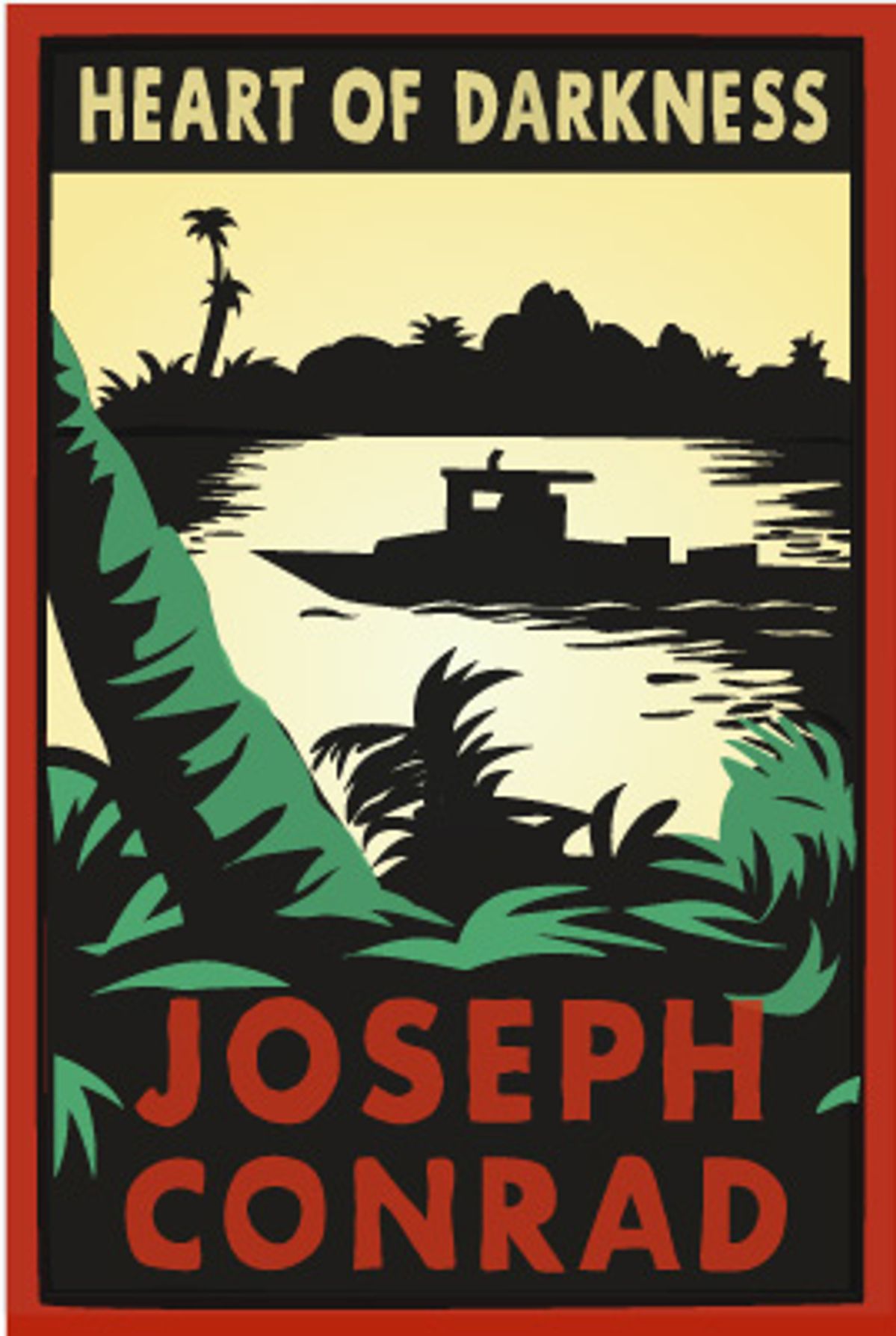
Joseph Conrad’s Heart of Darkness critiques European imperialism by challenging the belief that Africa was a place of “darkness” and “savagery”, instead suggesting that the true darkness lies within European imperialism and human nature. Conrad further uses modernist literary techniques such as frame narrative, symbolism, ambiguity and unreliable narration to demonstrate that the moral darkness associated with Africa is, in fact, embedded within European civilisation. The novel reflects the emergence of literary modernism in the late nineteenth century. By connecting imperial London with the colonial frontier of the Congo, Conrad illustrates the moral failure and darkness of empire, extending not only to the colonies but also to the heart of imperial nations.
The late nineteenth century witnessed the rapid colonisation of Africa during the “Scramble for Africa”. European governments justified expansion through the so-called “civilising mission”, claiming they were bringing civilisation, Christianity and progress to Indigenous peoples whom they regarded as inferior. In practice, colonial rule frequently relied on forced labour, violence and the exploitation of local populations to maximise economic profit. Within this historical context, Conrad’s Heart of Darkness exposes the hypocrisy of European imperialism, including the exploitation of native individuals and the ivory trade. Conrad uses the Congo to expose the gap between the ideals of the civilising mission and the reality of economic exploitation.
London represents the centre of the British Empire whilst the Congo represents the colonial frontier. Conrad connects both locations to demonstrate that imperialism corrupts both the colonies and Europe itself. However, London depends on the wealth and resources extracted from colonies such as the Congo. Conrad questions whether Europe itself is civilised by depicting Kurtz’s abuse of the local population. MacKay argues that modern London is characterised by uncertainty and deep insecurities, while Conrad suggests that corruption and violence are prevalent within the metropolis, not only in the Congo and its colonial states. The opening chapter shows that the Romans once described Britain as ‘dark’; this serves as a reminder to readers that Britain had a violent, dark past, challenging the notion that darkness belongs only to Africa and other colonised regions. Once travelling deep into the Congo and upon Kurtz’s death, it is implied that Marlow realises the darkness of imperialism extends beyond the Congo and into London.
The central motif of the novel is darkness. Darkness represents corruption, imperialism and human nature. The Congo represents darkness and embodies the moral corruption of imperialism in the story, whilst Kurtz personifies that corruption. Kurtz’s manipulation and abuse of the Indigenous peoples is displayed with the heads on stakes and the European imperialists’ obsession with the ivory trade. Kurtz’s final words suggest that he recognises the moral consequences of his pursuit of imperial power, as he exclaims “The Horror! The Horror!”, reflecting his realisation of the atrocities committed under imperialism. The darkness, therefore, serves as the story’s primary motif and symbol, emphasising that European imperialism was inherently corrupt, with Kurtz embodying this corruption.
Conrad uses modernist literary techniques to reinforce the novel’s identification and critique of European imperialism and moral corruption. The novel uses a frame narrative in which an unnamed narrator introduces Marlow. The frame narrative distances readers from the events in the Congo, preventing them from accepting a single, authoritative version of imperialism; readers can only interpret it through his perspective. Marlow is therefore an unreliable narrator; his account is subjective rather than objective. This uncertainty, which plagues the novel, reflects modern literary techniques that reject objective truth and traditional storytelling. Conrad’s modernist form therefore reinforces his critique of European imperialism because readers must interpret the complexities of morality for themselves.
Marlow and Kurtz represent contrasting responses to imperialism. Marlow functions as both narrator and witness, encouraging readers to question the morality of imperialism alongside him. His narration reflects sympathy towards the treatment of Indigenous peoples. He demonstrates that imperialism can be recognised and criticised, illustrated by his responses to the treatment of the indigenous peoples whilst under the ivory trade. Whilst Marlow has a sense of morality, Kurtz embraces the power of being a colonialist, abuses the local peoples for his gain, is obsessed with the ivory trade and whilst in Congo, experiences a moral collapse; Kurtz’s last words, “The Horror! The Horror”, illustrate a change in opinion, a recognition of the terrible acts he has committed. Kurtz embodies the hypocrisy and corruption of imperialism, which can manifest in individuals; the power structure corrupts people into believing they are superior. Kurtz therefore is a warning of the dangers of unchecked power.
Conrad, writing during the emergence of literary Modernism in the late nineteenth century, reflects modernist techniques such as frame narration, unreliable narration, rich symbolism, ambiguity, fragmented narration, and the questioning of objective truth. Bradbury (1971) argues that early modernist literature dismisses certainty and its traditional forms of storytelling. Instead, the technique focuses on uncertainty and the individual experience. Conrad thus reflects these ideas through the protagonist Marlow’s subjective narration, which forces readers to question and interpret the reliability of his experiences, thereby shaping their own interpretations of the events that occurred in the Congo. Conrad conveys uncertainty through Marlow in particular; he frequently admits he cannot fully explain or understand his experiences. This leaves readers to decide on Kurtz’s personality: a genius, a victim, or a villain. Ambiguity encompasses the story: Europe claims to be a civilised empire but commits brutal acts in the Congo. Kurtz is admired for his ability and condemned for his brutal actions. Ambiguity challenges morality and the novel’s distinctions among society, imperialism, wealth, and savagery. Fragmented narration begins on the River Thames prior to Marlow’s memories of the Congo. The story is told through recollections rather than in chronological order; information is revealed slowly through rumour and separate character narratives. The modernist literary technique of fragmentation delays certainty, creating mystery and advancing the sense of the unknown.
Conrad’s Heart of Darkness illustrates that darkness lies within humanity and not in Africa or colonial areas. The European Empire corrupts both coloniser and colonised through a strong power structure that treats indigenous populations as lesser than European civilisation. London and the Congo are deeply connected within the story; whilst London is presented as civilised and a prominent imperial metropolis, the Congo is depicted as savage and uncivilised. Conrad’s use of early modern literary techniques explores the story through Marlow’s eyes; fragmented narration creates ambiguity, allowing the reader to develop their own understanding, particularly regarding morality. Conrad exposes the hypocrisy of European imperialism and questions civilisation as a whole; challenged by the inability to attain objective truth, the story forces the reader to draw their own conclusions.
References
Bradbury, M. (1971). The social context of modern British literature. Schocken Books.
Conrad, J. (1902). Heart of darkness. William Blackwood & Sons.
Mackay, M. (2011). Great Britain. In P. Lewis (Ed.), The Cambridge companion to European Modernism (pp. 94–112). Cambridge University Press.