3rd Year
Examine why states use terror as an ideology as well as a tactic against their people and (using one of the following historical examples) analyse the extent to which state terrorism achieves its objectives. Choose one of the following historical examples: Stalinist Russia
In my research essay, I will be examining Stalinist Russia’s control between the 1920s and 1951, analysing this event alongside others to consolidate my evidence and provide arguments from other historians and varying opinions. I will be analysing Marxist-Leninist ideology and class struggles and how they were implemented by Stalin, Stalin’s politics, his use of terror as a tactic of manipulation and control, the Great Purge between 1936 and 1938 and its objectives and what Stalin achieved within his power. I will be using this information to understand his implementation of rapid industrialisation, agricultural collectivisation, genocide, abuse of minorities, his importance in World War two and the mass devastation of human lives due to these extraordinary factors of political and social control and his fight against political and social dissent.
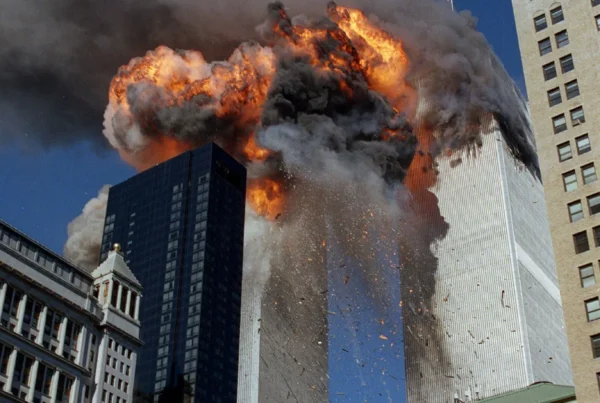
I will be exploring how various events both relate to Stalinist Russia’s terror and how they differ. My examples will include short examples of Syria, China, Hitler’s Nazi Germany, Myanmar, Saddam Hussein’s Iraq and a very argumentative topic, the United States of America and its “war on terror” invasion in Afghanistan, which commenced on November 7th, 2001, after the 9/11 terrorist bombings of September 11, 2001.
To understand state terrorism in Stalinist Russia, it is essential to comprehend the socio-political context of early 20th-century Russia and Stalin’s ascent to power. Stalin’s ascent to power was a political acrobat involving the exploitation of his communist party after the passing of the founder of the Bolshevik party, Vladimir Lenin, and the elimination of any political opposition. Stalin was appointed as the ‘General Secretary of the Communist Party’ in 1922, where he would further develop support amongst the party itself. Stalin eliminated any political rivals, including Trotsky, Zinoviev, and Bukharin, amongst others, which solidified his totalitarian dictatorship. Therefore, we can see how Stalin’s violent, acrobatic ascent to power demonstrates his malicious ability to control both politics and society through his later state terrorist activity; his totalitarian dictatorship was established by blood and manipulation.
The use of propaganda is a consistent theme among revolutions as a form of social control; Stalin’s propaganda and power of the media “underwent an obvious change” (Lenoe, 2009, p. 11). The use of propaganda was to promote and gather support from the working class and to promote coercion amongst the population, a consistent theme with revolution and terrorism. A crucial quote from Stalin that demonstrates his fervour and objective for revolution states, “Anyone who attempts to destroy the unity of the socialist state and the peoples of the USSR, we shall destroy such an enemy, even if he is an old Bolshevik; we shall destroy his entire kith and kin.” Anyone who threatens the unity of the socialist state, either indeed or in thought – yes, even in thought will be mercilessly destroyed” (Stalin, 1937).
Stalinist Russia employed state terrorism to promote a Stalinist-communist political agenda; Stalin implemented all forms of state terrorism, which included political repression, paramilitary, legal, extra-legal and tactics of violence that were used to suppress any potential resistance to his regime, whilst promoting his totalitarian dictatorship. Stalin’s implementation of terror can be acknowledged throughout his entire period of control, from silencing, eliminating, deporting, and often executing political enemies to implementing rapid industrialisation, agricultural collectivisation and a forced famine to promote a Russia which was referred to as 50-100 years behind the industrialised western world, employing a 5–10-year industrialisation process for Russia to be modernised. The results of these instances amassed a total of forty-five million deaths, pain, suffering, and extreme tactics of control. As historians Haynes and Hasan refer to industrialisation as the “price was enormous, coercion and loss of life, build, build, export, shoot, build industrialisation is like a march through a conquered territory” (Haynes & Hasan, 2003, p.62).
Stalin’s immense power was due to his totalitarian dictatorship, which, prior to the 20th century, had little to no history. Alike Stalin’s totalitarian dictatorship, Hitler’s Nazi Germany was co-occurring with Stalinist Russia, Randal Law quotes “it was in dictatorships that the potentiality for violence inherent in modern European statecraft was unleashed with most fury” (Law, 2015, p.159). The two countries shared a literal exact opposite formation of politics, whilst Stalinist Russia was an extreme far left communist regime, Hitler’s Nazi Germany was an extreme right wing Fascist dictatorship. As a result, although the politics of both Nazi Germany and Stalinist Russia were opposites, they shared many aspects of state terrorism. They both shared aspects such as centralised authoritarian control and wielding absolute power, the use of secret police such as the Gestapo in Nazi Germany and the NKVD for mass arrests and executions, and repression amongst both political rivals and ordinary citizens; they also shared control of media and propaganda. The Gestapo, similar to the NKVD, “quickly became the key functionality of the terror system armed with novel powers, arrests and detention” (Gellately, 1991, p.23). State terrorism, we can understand, can be implemented by any political regime, typically as an approach to extreme political change, and paramilitary forces such as the Gestapo and NKVD demonstrate the power of these regimes.
Ryan McDermot states in his article “Stalin: revolutionary in an era of war” (2006) Stalin’s intentions “above all commitment to advanced industrial technology and production his strategies for mass mobilisation, mass education, mass ‘culture’, even mass participation and his ideologically driven conviction, that the state should be the prime agent of the modernisation process. All are quintessentially modern phenomena that distinguish twentieth-century regimes from earlier state and societal formations” (McDermot, 2006, p.163), effectively arguing that for extreme changes, the` state must itself be powerful. This quote is not only applicable to Stalin’s Russia but also to Hitler’s Nazi Germany. Although Stalin’s later implementation of communism resulted in mass death and devastation, historians such as Ladislav Kovac mention that “the Leninist party may have been considered as one of the greatest inventions of the 20th century” (Kovac, 2002, p.1) demonstrating the radical change in political ideologies.
The Great Purge of 1936 to 1938 is the most infamous form of state terror in Stalinist Russia, this era witnessed mass arrests, an astonishing number of executions and force labour camps the Gulags to eliminate all perceived threats to the soviet political campaign whether military, individual or political. Haslam remarks that “there are few questions as intriguing and as baffling as the reasons for terror unleashed upon the USSR from 1936” (Haslam, 1986, p.395) this is due to the fact that throughout this period, there was a terrible number of deaths, the estimated number being 600,000 to over 1 million individuals were executed or sent to the Gulags. The Great Purge regularly targeted political rivals, ethnic minorities, and ordinary citizens who were accused of being counterrevolutionaries; this resulted in between 700,000 and 1.2 million executed individuals between these two years. Political rivals and perceived threats were often forced to confess to political crimes they did not commit, being called the “show trials,” serving as propaganda to demonstrate the power of Stalinist Russia and to intimidate the general population into coercion. Once exiles and criminals finished their sentences, the “NKVP was to round them up ‘the most harmful’ of them process their cases administratively through the Troika, revived in the fall of 1937 and shoot them” (Thurston, 1996, p.59), the Troika consisted of state police, communist party secretary and state procurator with the power to issue rapid and severe verdicts without the right of appeal.
Stalin’s craze for executions resulted in permitting regions to execute and exile an absurd number of individuals as a quota under the NKVD order—00447 act. The extent of the execution quotas surpassed 48,000 executions and 9,200 exiled individuals throughout the Great Terror, depending on the region. As a campaign of political and social terror, the ‘Great Purge’ of 1936-1938 objectives aimed to consolidate Stalin’s power, eliminate his political opposition and completely reshape the military, political and social landscapes. The political objectives were to eliminate all potential threats to his power, which included other politicians such as Trotsky, by executions under ‘show trials’, which consisted of the accused individual admitting to actions they did not commit. Other figures Stalin eliminated were from the Bolshevik party, which was also a socialist agenda, housing Stalin as one of their politicians. As a result, Stalin eliminated any potential threat to his absolute power. It is argued because of Stalin’s extreme behaviours that “anxiety as stressed by politicians that Stalin’s policies were alienating the working class from the party” (Haslam, 1986, p.399).
The consolidation of his power was also crucial to the Great Purge as via these executions of any individuals threatening his power; he developed a power structure that placed him as a totalitarian dictator. Stalin was deeply entrenched in his military capacity, and any military officials perceived as threats, much like those in the political sphere, were eliminated. Thus, he executed any officials who might attempt to stage a coup against him. As World War II was co-occurring with the Great Purge, the executions of military officials harmed his military power.
The ultimate objective of the Great Purge was to supress dissent and public revolution, the method I have explained above demonstrate the several ways Stalin assured his totalitarian dictatorship, consolidating his power as an absolute power. Stalin’s political agenda still aligned with the Leninist-Marxist ideals, yet he had his differences. The executions, imprisonment and exile were a form of social and public obedience, like the French Great Terror; Stalin made sure that any public dissent was suppressed, leading to an obedient state afraid of the repercussions of disagreeing with Stalin’s regime.
Similar to Nazi Germany, Stalinist Russia committed genocide against ethnic minorities, including the Polish, Ukrainian, Korean, Kulak and Chechen populations. There were between 100,000 and 400,000 Chechens executed and 390,000 Kulaks. The genocide of these individuals was due to political and economic reasons, as well as societal and political motives. The Kulak’s were targeted due to the collectivisation of agriculture, a result of Stalin’s political motives. The Kulaks owned a sizable portion of farms and property, perceived as a threat to agricultural collectivization, they were executed in mass numbers. The Chechens were executed for a separate reason: they were deported or executed due to being separatists under the Soviet Union, perceived as a wartime threat to Stalinist Russia. This demonstrates political and social paranoia under Stalin’s rapid societal and political reform during the 1930’s, the perceived potential threats were eradicated, focusing ethnic minorities under the banner of genocidal mass murders.
The reason for state terrorism, although under different political and social climates, shares many aspects. As I have stated above, the main reason for state terrorism is to control both political and social reform, using state terror to drive these motives under a heavily violent and repressive regime. Modern representations of state terrorism include the Assad regime in Syria, Myanmar’s civil war and Chinese involvement with Uyghur Muslims. The common ground of these examples of state terrorism is political dissent, the control of ethnic minorities and often genocide, obedience amongst the population and a political justification for the state terrorism itself. Another common factor of why state terrorism is employed is due to extremist political ideologies, often far left- or right-wing policies that use control to operate their political and religious agendas. We can therefore understand that state terrorism is implemented for radical political, social, or religious gain. State terrorism is also violent, repressive, and often genocidal. Syria, Nazi Germany, Stalinist Russia, China and even the US and their involvement in Afghanistan share violence and death as common ground. They are always a result of civil disruption, whether political, through warfare or rapid political change. Stalin’s example is Tsar Nicholas II, Nazi Germany, the result of World War I and economic instability; Afghanistan, the result of 9/11 and America’s “war on terror”, and Syria, the rapid implementation of a radical interpretation of Muslim morals and their manipulation of the Sharia law.
As a result of most state terrorist acts being attributed to totalitarian regimes, it is wise to develop an understanding of what, a totalitarian dictatorship/regime is. All totalitarian regimes, such as Stalin’s Russia, Hitler’s Nazi Germany, and Saddam Hussein’s Iraq, amongst many others, share key attributes. These attributes include centralisation of power, the control of ideologies, the use of political and social repression, state control, control of the economy, propaganda and control of media and militarisation and often expansion of the state. All these crucial factors link to state terrorism, as ultimately, political dominance through violence and control itself is state terror.
Historians Jackson, Murphy and Poynting, in their paper on contemporary state terrorism, argue that the definition of state terrorism is obscure as “it would have included not only foreign US policy but also Hitler and Stalin” (Jackon, Murphy and Poynting, 2010, p.13). State terrorism without totalitarian dictatorships is few in numbers, yet the United States of America have pursued expansion of military control, violence to enforce politics and control of a population. Instances of American democratic, non-totalitarian terrorism include its involvement in Afghanistan, Iraq and Vietnam in which America used violence to control a population and benefit economically. The “War on Terror” administered by George W Bush is a complex topic, but despite state terrorism administered from America onto Afghanistan, more than 70,000 civilians were killed by the US military in the Afghan war of 2017.
In conclusion, Stalinist Russia used state terrorism throughout the early 20th century to rapidly expand it is industrial and agricultural and to solidify a nationalistic state. As I have compared various forms of state terrorism in the 20th and 21st centuries, we can understand both the common ground they share and their differences. Stalinist Russia, as a totalitarian dictatorship, used its military, political and Stalin’s political acrobats to employ a strict society. Stalin acknowledged that under the Tsarist rule, Russia was 50-100 years behind modernised countries; Stalin’s main prerogative was to industrialise Russia within 5-10 years, leading to the collectivisation of agriculture, political repression, and the execution of any threats to his totalitarian dictatorship.
The ‘Great Purge’ of 1936-1938 was the ultimate demonstration of social upheaval, resulting in 700,000 to 1 million deaths because of paramilitary, famine, and executions. The Great Purge’s success and failures were demonstrated within a range of factors. The success of the Great Purge includes the elimination of any political threats to Stalin’s dictatorship, such as Trotsky and the Bolshevik party. The control of the military was both successful and a failure as it once neutralised the Red Army, securing the safety of insurgency whilst also failing as the military developed apparent weaknesses during World War II and the devastation of 24 million soldiers, which could have been reduced with the more advanced military officials which were executed.
Stalin’s success was largely developed within his totalitarian dictatorship and the political dominance he achieved through executions, paramilitary forces, the nationwide implementation of agricultural collectivisation, the introduction of Stalinist communism, and the rapid industrialisation of Russia. The failures are attributed to the extensive deaths accumulated because of Stalin’s extensive political policies, such as a forced famine, the collectivisation of agriculture resulting in poor food and the poor military power because of the execution of any military officials with the potential power of insurgency.
State terrorism under Stalinist Russia was, therefore, effective under his objectives of controlling Russia and his political orders, which were swiftly and violently forced upon his population. This does not mean that all instances of state terrorism are successful such as Nazi Germany and Hitler’s regime, and Mussolini’s totalitarian dictatorship and state terrorism, all occurring during World War II. As a final reference, Haynes and Hasan mention that “when Stalin died in 1953, this (industrialisation) was far from complete, but a mass urban base was created and with it a heavy industrial base” (Haynes & Hasan, 2003, p.62) attesting to the success of Stalin’s regime and primary objective of the industrialisation and modernisation of Russia. Historian Marshall Shatz refers to the Great Purge as “one of the most enigmatic events of the 20th century” (Shatz, 1990, p.1).
References:
Haynes, M. and Hasan, R., 2003. A Century of State Murder? Death and Policy in Twentieth-Century Russia. London: Pluto Press.
McDermott, K., 2006. Stalin: Revolutionary in an Era of War. London: Bloomsbury Publishing.
Haslam, J., 1986. Political opposition to Stalin and the origins of the terror in Russia, 1932-1936. The Historical Journal, 29(2), pp.395-418.
Thurston, R.W., 1996. Life and Terror in Stalin’s Russia, 1934-1941. New Haven: Yale University Press.
Shatz, M., 1990. Stalin, the Great Purge, and Russian history: A new look at the “New Class”. The Russian Review, 49(1), pp.48-66.
Gellately, R., 1991. Rethinking the Nazi terror system: A historiographical analysis. German Studies Review, 14(1), pp.23-38.
Jackson, R., Murphy, E. and Poynting, S. (eds), 2010. Contemporary State Terrorism: Theory and Practice. London: Routledge.
Lenoe, M.E., 2009. Closer to the Masses: Stalinist Culture, Social Revolution, and Soviet Newspapers. Cambridge, MA: Harvard University Press.
Kováč, L., 2002. Natural history of Communism. Pliability of human beings and immutability of human nature. II. Autonomous dynamics of memes and institutions. Central European Political Science Review, 3, pp.74-110.
Law, R.D. (ed.), 2015. The Routledge Histor