4th Year
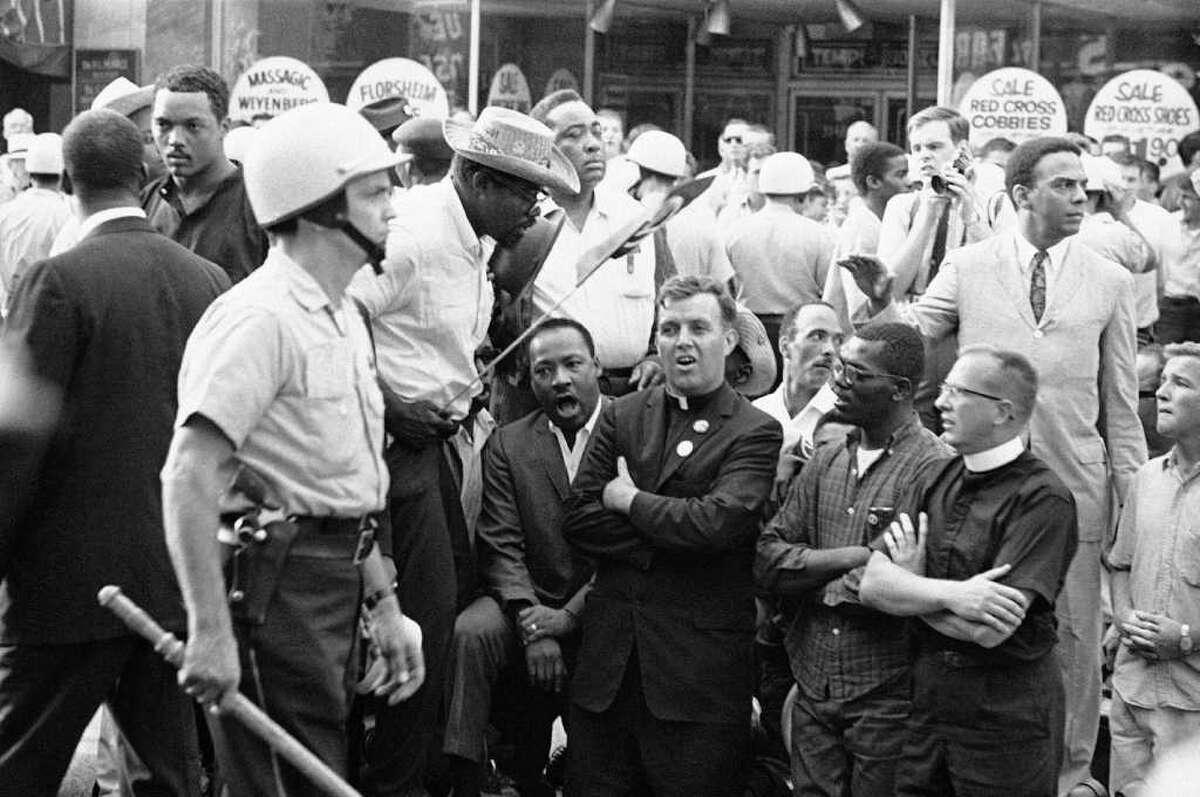
Direct action emerged because legal and political efforts had failed to end segregation, while Cold War pressures highlighted the contradiction between America’s democratic ideals and racial inequality. Although legal reforms targeted segregation, implementation remained slow, particularly in the Southern states. One of the earliest and most significant examples of direct action occurred in Montgomery, Alabama, during the Montgomery Bus Boycott of 1955-1956, when black residents refused to ride the buses. Direct action was largely nonviolent, including the subsequent Greensboro Sit-Ins (1960) and the Freedom Rides (1961), which challenged segregation through nonviolent protest. Slow implementation meant that court decisions alone could not enforce desegregation, encouraging communities, churches and organisations such as the SCLC and SNCC to embrace direct action. Young activists increasingly favoured direct action over waiting for legal reform. According to Chafe (2003), “the story of the Greensboro sit-in movement represents a microcosm of the frustration, anger, and determination that surged through black America in the years after the Brown decision” (p. 165).
Media coverage exposed racial violence, increased public sympathy and encouraged federal intervention. One example of resistance to desegregation was the Little Rock Nine crisis, where Governor Orval Faubus deployed state troops, barring the black students from entering the school. During the crisis, President Dwight D. Eisenhower federalised the Arkansas National Guard and deployed the 101st Airborne Division to escort the Little Rock Nine into Central High School, illustrating the importance of federal intervention as they entered the school. Although these campaigns were largely successful in advancing civil rights and Black equality, the Little Rock Nine demonstrated that desegregation efforts often faced fierce resistance, requiring federal intervention to enforce constitutional rights.
Founded in 1957, the Southern Christian Leadership Conference (SCLC) advocated nonviolent direct action based on Christian principles. The SCLC organised large-scale campaigns such as the Montgomery, Birmingham and Selma movements, using speeches and the media to gain national support and pressure the federal government to respond to civil rights crises. King’s speeches attracted national media attention and inspired widespread support for civil rights. However influential, Martin Luther King wasn’t solely responsible for the Civil Rights Movement. CORE organised the Freedom Rides, SNCC led numerous grassroots campaigns, and individuals sustained local efforts. As Fairclough notes, “The Freedom Rides marked the end of the honeymoon between SNCC and SCLC” (Fairclough, 1987, p. 82), highlighting the different strategies adopted by the movement’s organisations.
Direct action transformed the twentieth-century Civil Rights Movement by challenging systemic racial inequality. Direct action gained national attention and pressured the federal government to support desegregation. Whilst occurring locally in America, particularly in the Southern states, the movement inspired further international movements, such as the Australian Freedom Rides of 1965, organised by the Aboriginal group Student Action for Aboriginals (SAFA), and the South African Anti-Apartheid Movement, demonstrating the power of civil rights and equality agendas. Although King was an essential figure in the Civil Rights Movement, he depended on collective action by organisations and ordinary activists. Ultimately, the Civil Rights Movement demonstrated that lasting social and political change was achieved not by a single individual but by a collective of non-violent activists striving for equality.
References
Chafe, W. H. (2003). The unfinished journey: America since World War II (5th ed.). Oxford University Press.
Fairclough, A. (1987). To redeem the soul of America: The Southern Christian Leadership Conference and Martin Luther King, Jr. University of Georgia Press.