4th Year
The U.S. Civil Rights Movement emerged from a long history of African American resistance to segregation, disenfranchisement and racial inequality. Organisations such as the NAACP, SCLC, SNCC and CORE played important roles in challenging racial discrimination, particularly as direct-action protests grew in the 1950s and 1960s. Campaigns such as the Montgomery Bus Boycott of 1955–1956, the Freedom Rides of 1961 and the Selma marches of 1965 demonstrated the increasing pressure placed on racial segregation within the United States. However, the Civil Rights struggle did not develop solely within a domestic context.
During the twentieth century, various global developments, including both World Wars, rapid decolonisation and Cold War competition, increasingly shaped the political environment surrounding the American Civil Rights Movement. These developments challenged established racial hierarchies and made racial discrimination within the United States increasingly damaging to America’s international reputation. At the same time, the American Civil Rights Movement itself influenced struggles abroad, including the Australian Freedom Rides of 1965 and the emergence of the Northern Ireland Civil Rights Association (NICRA) in the late 1960s. Therefore, despite global tensions around the US Civil Rights Movement, these developments created favourable conditions for political and social reform. At the same time, African American activism and direct action remained the principal drivers of change.
The twentieth century saw significant global change, including both World Wars. The experience of global warfare helped expose the contradiction between America’s claims to freedom and the widespread racial discrimination within the United States; these factors contributed to the growing Black demands for equality. Military service showed how international conflict could contribute to the American Civil Rights Struggle. For some Black soldiers, experiences abroad further highlighted the contradiction between fighting for freedom overseas and experiencing racial discrimination at home.
Drawing on Williams, Ang and Chinoy note that “African American soldiers’ experiences in war and their battles with the pervasive racial discrimination in the US military informed their postwar disillusionment and subsequent racial militancy as veterans” (Williams, 2007, cited in Ang & Chinoy, 2026, p. 4). This illustrates the contradiction between American democratic ideals and the racial discrimination experienced by Black servicemen. However, global warfare did not create Black resistance; rather, international conflict strengthened existing demands for equality and exposed contradictions within American democracy.
After World War II, the world experienced a major wave of decolonisation. This affected the American Civil Rights Movement as newly independent African and Asian nations made racial inequality an international issue. International politics introduced two overlapping struggles: the East-West conflict between the Soviet Union and the United States and the North-South conflict between Western powers and emerging independent countries. Following colonialism, Asian and African countries in particular were deeply conscious of racial inequalities they experienced during colonialism. These rapid changes in international politics damaged America’s reputation due to ingrained and continuing racial inequalities.
American racism was now affected through foreign perception and was a major concern for America’s image as a country of both freedom and democracy. Decolonisation therefore did not cause the Civil Rights Movement in America; instead, it highlighted racial inequality and increased its significance to America’s international image. Skrentny argues that “American racist practices therefore provided ample evidence that Americans did not respect the rights of people of colour” (Skrentny, 1998, p. 245). This suggests decolonisation did not directly influence the Civil Rights Movement, but it increased the international scrutiny America faced rather than directly shaping domestic reform.
The aftermath of World War II created a bipolar international system dominated by the United States and the Soviet Union, intensifying competition between the two nations. The Cold War competition turned racial discrimination into a foreign policy problem. The Soviet Union exploited American segregation and racial violence through propaganda, challenging America’s claims of freedom and democracy and damaging its international reputation. Van Bostelen demonstrates the extent of Soviet propaganda, stating that “in 1963, the Soviet Union broadcast 1,420 anti-American commentaries about US rights violations in the wake of a racial crisis and rioting in Birmingham” (Van Bostelen, 2021, p. 57), reiterating that visible progress in Civil Rights became increasingly valuable to America’s international image.
The United States attempted to portray itself as the leader of the democratic world and the land of the free; racial inequalities deeply ingrained in U.S. society undermined this perception. Green argues that “the problem of race attracted so much foreign attention in the early Cold War that it threatened to undermine US claims to the superiority of democracy over communism” (Green, 2002, p. 219). Therefore, the Soviet Union was able to exploit genuine racial inequalities within the United States through propaganda, undermining America’s claims of democratic superiority. African Americans thus did not particularly benefit from international pressure but rather, through visible direct action, they introduced and exposed racial inequalities to a global audience.
America’s desegregation of its education system became particularly important to its international image; events such as the Little Rock Crisis of 1957 illustrated racial inequality to international audiences as it was publicised globally. However, progress towards educational integration demonstrated America’s capacity for democratic reform.
The Selma marches demonstrated how the American Civil Rights struggle had become increasingly important to America’s international reputation. Despite widespread international coverage of police brutality at Selma, foreign criticism was more restrained than during earlier American racial conflicts (Dudziak, 2015). President Johnson’s support for voting-rights legislation strengthened international perceptions that the federal government was increasingly committed to racial reform. Cold War pressure made racial reform increasingly important to the federal government. However, this pressure relied on African American activists and their associated groups exposing racial discrimination to national and international audiences.
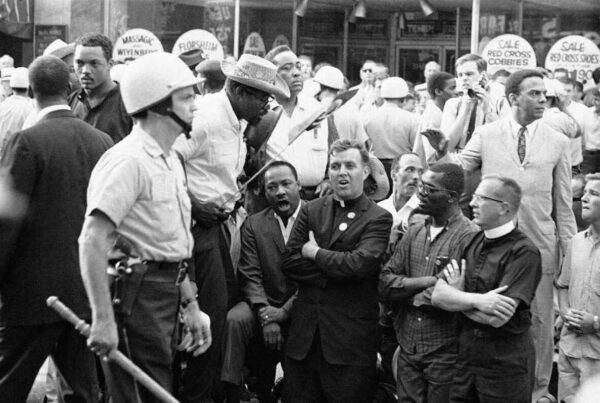
Although global forces substantially shaped the Civil Rights Movement, international pressure alone was not enough to produce meaningful reform. African American activists, including prominent groups such as the National Association for the Advancement of Colored People (NAACP), Southern Christian Leadership Conference (SCLC), Congress of Racial Equality (CORE) and the Student Nonviolent Coordinating Committee (SNCC), pursued racial equality through different forms of activism. These groups drove change through direct action in response to continued segregation, disenfranchisement, and, importantly, the slow pace of institutional reform.
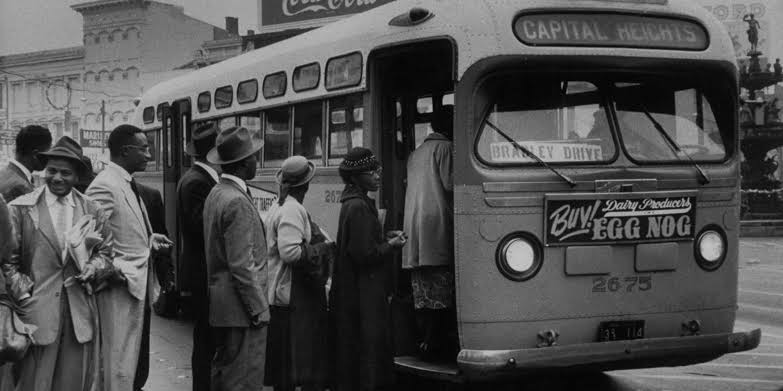
Nonviolent direct-action protests included, but were not limited to, the Montgomery Bus Boycott (1955-1956), the Freedom Rides (1961), and the Birmingham Campaign (1963), demonstrating how these groups used sustained nonviolent direct action to pressure segregation. Glennon claims, “the 381-day boycott had caused Montgomery City Lines and downtown merchants to lose money” (Glennon, 1991, p. 96), showing that the successful nonviolent protest had both social and economic effects. King rejected gradual reform as too slow; in his Letter from Birmingham Jail, he argued that “this wait has almost always meant never” (King, 1963), showing that activists believed racial reform was moving too slowly and that direct action was necessary to produce change. King was crucial in articulating nonviolent direct action, yet groups such as SNCC, local activists, and students were fundamental in building momentum. African Americans thus did not simply benefit from international pressure; rather, through visible direct action, they exposed racial inequalities to a global audience. These examples show that global conditions provided leverage, allowing African American activists to produce political change.
The success of the Montgomery Bus Boycott demonstrated the effectiveness of nonviolent protest, helping establish direct action as a model for later protests such as the sit-ins of 1960, the Freedom Rides, the Selma to Montgomery Marches, the Birmingham Campaign and various other campaigns against segregation.
Global forces and the American Civil Rights Movement were intertwined. While international developments influenced the American movement, the movement later influenced developments abroad. Northern Ireland presents a perfect example, where the Northern Ireland Civil Rights Association (NICRA) used nonviolent direct action to challenge political, social and economic discrimination against Catholics. NICRA was founded in the late 1960s and used protest methods prominent in the American Civil Rights Movement. Marches and nonviolent direct action led their campaign, allowing Northern Irish activists to challenge political, religious, and social discrimination publicly.
Therefore, the American Civil Rights Movement influenced protest movements globally, as marches and direct action gave Northern Irish activists methods to challenge systemic discrimination. O’Brien explains “the influence that the American campaign had on Irish activists and given Bernadette Devlin’s particular references to the African American fight for equality” (O’Brien, 2010, p. 94). Irish activism therefore demonstrates the two-way relationship between global forces and the American Civil Rights Movement. While global forces influenced the American movement, American nonviolent direct action later influenced protest movements abroad.
The U.S. Civil Rights struggle was therefore shaped significantly by globalised forces. During the Cold War, racial segregation and inequality undermined America’s claims of democracy and freedom. These forces increased pressure for reform both nationally and internationally, as shown by events such as the Northern Irish struggle, which was heavily impacted by American nonviolent direct action. Racial reform was partly encouraged by the need to improve America’s international reputation, while also producing significant political change.
Both World Wars changed the racial context surrounding the Civil Rights struggle, while decolonisation after World War II increased international attention towards American racial inequality. The Cold War further pressured the United States to address racial discrimination as it continued to damage America’s international reputation. The U.S. Civil Rights Movement influenced the wider world through televised news and its successful campaigns. Direct action by groups such as the NAACP, SCLC, CORE, and SNCC remained central to reform, while figures such as Martin Luther King Jr. played an important role in promoting nonviolent protest and racial equality. Ultimately, despite global forces influencing the U.S. Civil Rights Movement, African American direct action remained the core driver of both political and social change.
References
Ang, D., & Chinoy, S. (2026). Vanguard: Black veterans
and civil rights after World War I. The Quarterly Journal of Economics, 141(1),
795–844
Glennon, R. J. (1991). The Role of Law in the Civil Rights
Movement: The Montgomery Bus Boycott, 1955- 1957. Law and History Review,
9(1), 59–112.
https://doi-org.libraryproxy.griffith.edu.au/10.2307/743660
Green, L. B. (2002). [Review of Cold War Civil Rights:
Race and the Image of American Democracy, by M. L. Dudziak]. Law and
History Review, 20(1), 219–221.
https://doi-org.libraryproxy.griffith.edu.au/10.2307/744178
King, M. L., Jr. (1963). Letter from Birmingham Jail.
The Martin Luther King, Jr. Research and Education Institute, Stanford
University
O’Brien, M. J. (2010). Irish America, Race, and Bernadette
Devlin’s 1969 American Tour. New Hibernia Review / Iris Éireannach Nua, 14(2),
84–101. http://www.jstor.org.libraryproxy.griffith.edu.au/stable/20779241
Dudziak, M. L. (2015). ‘Selma and the International History of American Civil Rights’, Perspectives on History, 53(5).
https://www.historians.org/perspectives-article/selma-and-the-international-history-of-american-civil-rights-may-2015/
Skrentny, J. D. (1998). The Effect of the Cold War on
African-American Civil Rights: America and the World Audience, 1945-1968. Theory
and Society, 27(2), 237–285.
http://www.jstor.org.libraryproxy.griffith.edu.au/stable/657868
Van Bostelen, L. (2021). Analysing the Civil Rights
Movement: The Significance of Nonviolent Protest, International Influences, the
Media, and Pre-existing Organisations. Political Science Undergraduate
Review, 6(1), 53–61. https://doi.org/10.29173/psur185